The word "retreat" carries weight. It suggests withdrawal, escape, transformation — a before and after. The marketing language around wellness retreats has amplified this considerably. You'll often find language about breakthroughs, renewals, and life-altering shifts.
That framing sets people up for a particular kind of disappointment. Not because retreats aren't valuable, but because the actual experience is usually quieter, more ordinary, and more specifically useful in ways that don't make good marketing copy.
This article is an attempt at a more accurate description of what retreat programs actually involve — the experience on the ground, not the aspirational version.
The first day or two
Most participants report that the early part of a retreat is uncomfortable in ways they didn't expect. Not physically — usually the accommodation is fine and the food is decent. The discomfort is more specific: the absence of the usual stimulation.
When you remove work, notifications, screens, the pressure to be productive, the constant availability of entertainment, and the familiar social context of home and colleagues, what's left is often a lot of mental noise. The thoughts that the usual stimulation was keeping at bay. A restlessness that doesn't have an obvious outlet. Sometimes boredom that feels sharper than expected.
This is not a problem with the retreat. It's a fairly reliable indicator of how busy most people's attention has been for an extended period. The retreat hasn't created the noise — it's removed the cover for it.
Experienced facilitators recognize this pattern and don't try to fill it prematurely. The temptation, for both participants and organizers, is to add more activity. But the discomfort of the early days, when held with some patience, typically shifts. By day two or three of a longer program, most participants describe a noticeable reduction in that restlessness. The mental chatter doesn't disappear, but it becomes less urgent.
What facilitated sessions involve
Retreat sessions vary significantly depending on the program type, but in general, facilitated sessions in wellness retreats involve one or more of the following:
- Guided observation practices — structured attention exercises with a facilitator, typically involving breath, body, sound, or surrounding environment as anchors
- Group dialogue — facilitated conversation around a theme or question, usually focused on personal observation rather than advice-giving or problem-solving
- Movement practices — gentle, non-competitive movement (yoga, walking with awareness, stretching) — distinct from exercise in both intensity and purpose
- Journalling or reflective writing — unshared, self-directed writing with optional prompts
- Nature-based activities — structured time outdoors with observation prompts or simply open walking time
What good facilitation tends to have in common is a lightness of instruction. The facilitator's role isn't to guide participants toward particular insights or to model a kind of exemplary calmness. It's closer to creating conditions and then stepping back — being available without taking over the space.
What unstructured time is actually for
Well-designed retreat programs include significant amounts of unstructured time — periods with no scheduled activity, no expectation of participation, and no output required. This is often the least understood element for first-time participants.
The temptation during unstructured time is to fill it: to read something useful, to process what happened in the last session, to make notes about insights, to have conversations with other participants. Some of that is natural and fine. But the particular value of genuinely unstructured time is what happens when you don't fill it — when you allow your attention to move where it wants to, without direction.
What people report in that space varies widely. Some people feel restless for the entire time. Some find themselves crying unexpectedly. Some simply sleep. Some walk the same loop several times without intending to. Some sit and notice that they feel, for the first time in months, something close to genuinely quiet.
None of these is the "right" response. The point isn't to produce a particular state — it's to create space for whatever is actually present, without immediately doing something about it.
The role of the physical environment
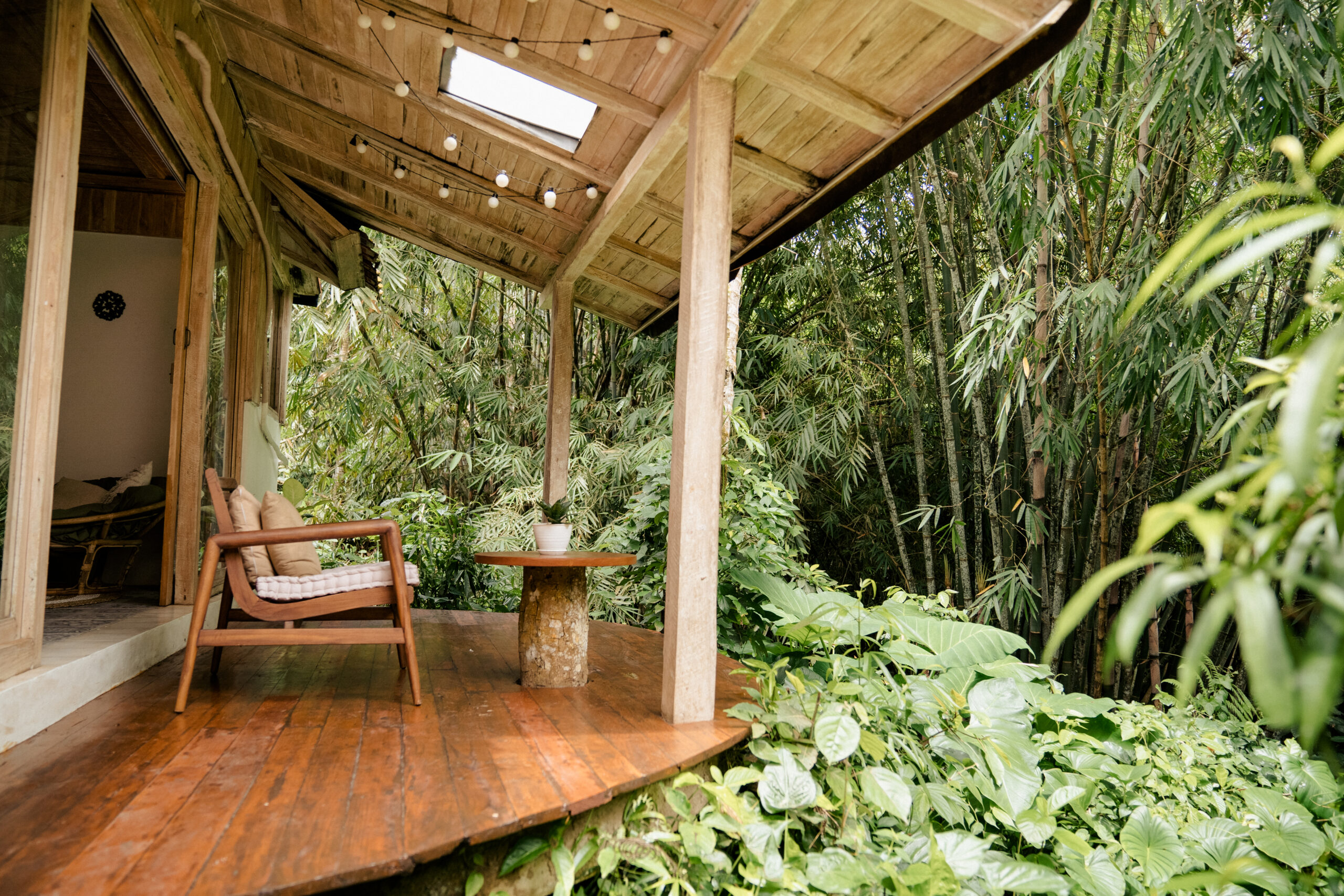
The setting of a retreat matters, but probably not in the way the marketing usually suggests. Beautiful landscapes are enjoyable, but they're not what makes a retreat meaningful. What matters more is that the environment is genuinely quiet, that it supports the pace the program requires, and that it doesn't impose its own demands.
Retreats in remote locations often work well because they remove the possibility of casual exit. When it's straightforward to leave, the early discomfort is more easily avoided. When you're somewhere that requires more effort to leave, you're more likely to sit through the uncomfortable parts — which is, often, where the more interesting parts of the experience are.
Simple, functional accommodation tends to work better than luxurious settings for most retreat purposes. This is partly practical — opulent environments carry their own stimulation — and partly attitudinal. When the physical setting is austere enough to not be interesting in itself, attention tends to move inward. That's generally more useful for the purposes of a wellness or mindfulness program.
Social dynamics in small groups
Retreat programs that involve group sessions introduce a social dynamic that participants often underestimate. Spending several days with a small group of strangers — sharing meals, participating in sessions together, moving through the same quiet environment — tends to create an unusual kind of intimacy relatively quickly.
People often talk about retreat connections as being different from the social connections they have in ordinary life. There's probably something real here: the context is stripped of the usual social performance, the shared experience creates common reference, and the relatively contained nature of the retreat makes the connections feel more mutual.
This can be genuinely valuable. It can also be uncomfortable for people who find extended proximity to strangers difficult, or who are private about personal material in group settings. These are worth considering honestly before choosing a group retreat format.
What participants often describe retrospectively
When participants reflect on their retreat experiences some weeks or months later, the things they mention most often are not what they expected to value. Rarely do people describe a specific session or insight as the most significant thing. More commonly, they describe something more diffuse:
- The experience of sleeping well for several consecutive nights
- Meals that they actually tasted because they weren't doing something else at the same time
- A conversation that happened casually, not in a session, that stayed with them
- A particular morning where they noticed the quality of light, or an unexpected feeling of contentment that didn't seem to be attached to anything specific
What these have in common is ordinariness. The value wasn't in anything extraordinary — it was in the quality of attention brought to ordinary things. That is, in some sense, the practice.
Managing expectations before you go
The most useful frame for approaching a retreat is probably this: you are going somewhere quieter, with a reasonable structure, to spend time differently than usual. That's it. Not to fix something, not to discover something, not to emerge changed. The opportunity is available, but it isn't guaranteed, and it isn't the point.
People who arrive at retreats with very specific goals — "I need to figure out what to do with my career" or "I want to deal with my anxiety" — often find that the experience doesn't address those things directly. What tends to happen instead is something more like a general settling. The specific concerns are still there when you return. But the frantic quality of the attention you've been giving them sometimes changes.
Whether that's worth the cost and time of a retreat is a genuinely individual question. For some people, the answer is clearly yes. For others, a week camping alone, or a long solo walk, would do the same thing. A retreat is a supported, structured version of stepping back — not the only version.
Note: This article is for general informational purposes and describes general retreat experiences. Individual programs vary. R3 Retreats programs are not clinical or therapeutic services.